Guide
Building with a toddler: a parent's guide
How to build LEGO® DUPLO® models with a child of 1½ to 4: short sessions, small jobs, reading steps together, safety, tidy-up and play afterwards.
Building from instructions with a toddler is a different activity from building alone. The goal is not a finished model in the shortest time. It is twenty minutes of looking, naming, pressing and laughing, with something to play with at the end. The big LEGO® DUPLO® bricks make that possible: they are large enough for small fingers to grip, they click together with a firm press, and a model of 30 to 50 pieces is a real achievement for a two- or three-year-old.
Almost everything that goes wrong in these sessions comes down to two things: the build runs longer than your child’s attention, or your child has nothing to do. The sections below deal with both, then with the moments every parent meets sooner or later: the model that gets knocked flat, the tidy-up, and the question of what to do with the thing once it stands.
Keep sessions short
Toddlers concentrate in short bursts, and the length of a burst changes from day to day. Plan for that instead of fighting it.
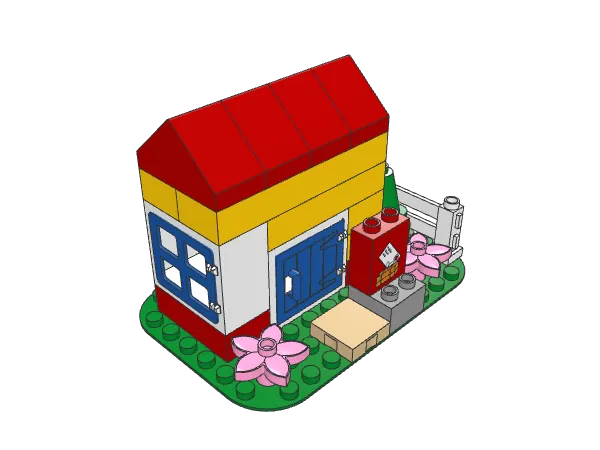
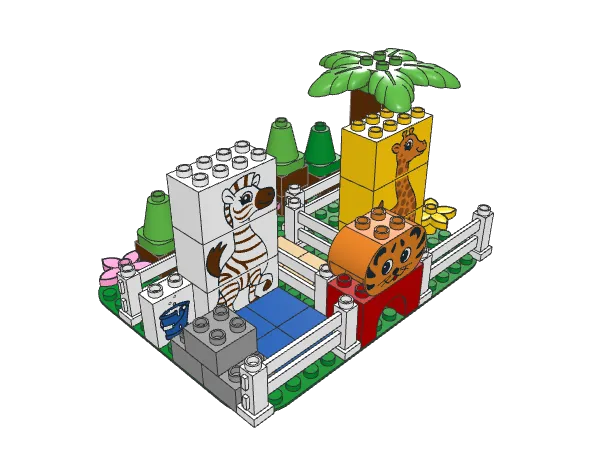
- Look at the size first. Every DUPLO® build on this site shows its piece and step count on the card. The Toddler House has 33 pieces in 11 steps; the Toddler Zoo has 41 pieces in 11 steps. Builds of this size usually fit one sitting, but there is no rule that says they must.
- Stop at a natural break. Most toddler builds go in the same order: the baseplate, the main building or animal, the roof, then the garden or yard. Each of those is a good place to stop. A house with no roof yet is still a house.
- Leave it out. If the model stays on the table or the floor, it is easy to come back after a nap or the next morning. Compare the model in front of you with the steps on the page to find where you stopped, and carry on from there.
- End while it is still fun. Stopping one step early with a happy child beats finishing with a tired one.
Give your child a job
A toddler who only watches gets bored. A toddler who has a job stays with you. The jobs that work best are small, clear and physical.
Jobs for younger toddlers (about 1½ to 2½)
- Finding the brick. You name the color (“can you find a red one?”) and your child brings it. This turns the pile of parts into a game and practices colors at the same time.
- Pressing it down. You place the brick on the right studs, your child presses it until it clicks. The click is satisfying, and it gets the brick properly seated.
- Putting on the last piece. A flower, a cone tree, the top of a tower. Ending each step with your child’s piece gives them ownership of the model.
Jobs for older toddlers (about 2½ to 4)
- Finding the shape as well as the color. “A long red one” or “a yellow one with a window” asks for two things at once.
- Placing the brick themselves. Point at the spot on the baseplate and let them line it up. Help only if they ask, or if a brick is badly off.
- Choosing. Which side does the mailbox go? Does the tree go in front or behind? Small decisions in the garden or yard steps cost nothing and matter a lot to a three-year-old.
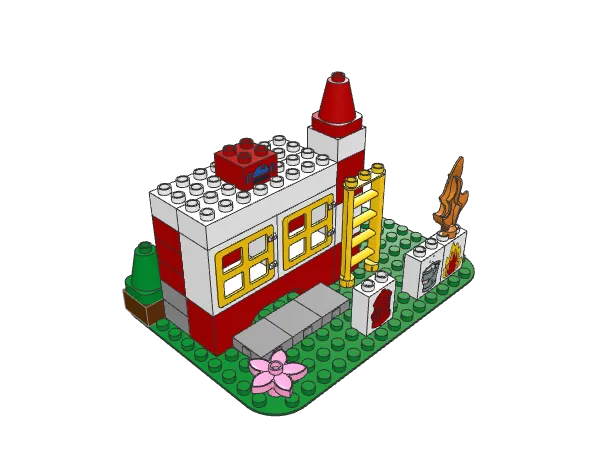
Some steps are better done by a grown-up. Doors and windows that hang on small hinge pins inside a frame are the usual example: in the Toddler House and the Toddler Fire Station, clipping the door or window into its frame needs more precision than small fingers have. Do that part, then hand the frame over to be pressed onto the studs.
Reading a step together
The instructions on this site are a 3D model you can turn around, with a slider to move through the steps. With a toddler, the screen becomes a picture book.
- Look at the step before you build it. Point at the new pieces, which are highlighted, and ask what they are: “What is that? A window? What color?”
- Count the new pieces. The step card lists each new piece and how many you need. Counting them out onto the table before you start is a good habit, and a good counting game.
- Turn the model. Drag the 3D view so it faces the same way as the model on the table. Toddlers often find a match between screen and table easier than a flat picture.
- Build, then compare. After the pieces are on, look back at the screen together: “Does ours look like that one?”
On a phone, the viewer can go full screen, which makes the pieces large enough for a small child to see from your lap. For a full tour of the viewer and the step cards, see how to read the instructions.
Let them change things
The instructions are a starting point, not a test. Most toddler builds have parts where nothing depends on exact placement, and those are the best places to let your child decide.
- Swap colors. If your child wants a green roof instead of a red one, a green roof it is. The house will still stand.
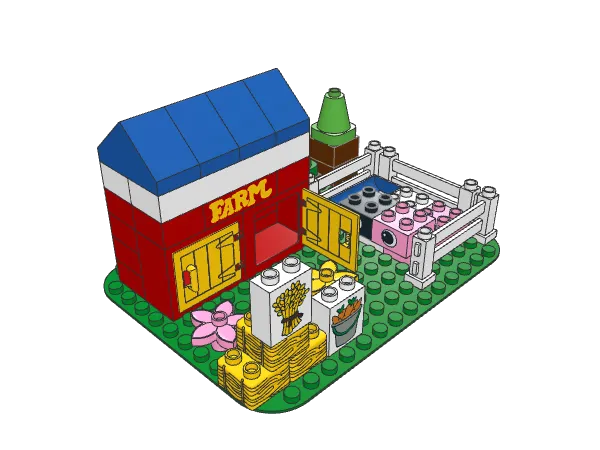
- Swap animals. Animals in big-brick builds are usually defined by color more than shape, so trading one body brick for another changes the species. If the Toddler Farm needs a horse instead of a pig, your child can pick the brick that makes it one. Easy LEGO® DUPLO® ideas has a small table of color combinations to try.
- Move the garden. Trees, flowers, fences and buckets can go anywhere on the baseplate.
If a change does block a later step, you will see it when you get there, and you can move one brick then. That is a good lesson on its own.
When it gets knocked down
It will. A toddler swinging a door hard, a sibling walking past, or your child deciding the dinosaur should stomp on the castle. Some ways to keep this calm:
- Treat it as part of the play. Knocking a tower down and building it up again is a perfectly good game for a two-year-old.
- Build on a baseplate. A model on a baseplate holds together much better than one on the table, and if it tips over, most of it stays in one piece. All the DUPLO® builds on this site start from a baseplate.
- Rebuild from the steps. If a section comes apart, find the step where it was built and do it again. The 3D view makes it easy to see which piece goes where.
- Protect the fiddly bits. If doors or windows on hinges keep popping out, leave them closed while your child plays, or take them off and put them back at the end.
Safety while you build
Age labels, small parts and how big bricks differ from standard ones are covered in DUPLO® vs LEGO® bricks. Within a building session itself, two habits matter most:
- Clear the floor first. Before you tip out the tub, look for small pieces left by older siblings: a stray standard brick or a tiny accessory is easy to miss among big bricks of the same color.
- Retire damaged bricks. A brick that has been chewed or has cracked along a corner can break further. Take it out of the tub rather than putting it back with the rest.
Tidying up
DUPLO® bricks are big, which is good for building and bad for storage: a few builds’ worth of parts fills a box quickly. A system that a toddler can help with makes tidy-up part of the routine.
- Open bins rather than lidded boxes. A shallow open bin on a low shelf lets your child see what is inside and put bricks back without help.
- Keep a favorite together. If your child wants to build the same model again, store its parts as a set; Cleaning, storing and displaying your builds explains a simple way to do that.
- The baseplate as a tray. Building on a baseplate on the floor, or on a play mat, keeps loose bricks in one area and makes the final sweep quick.
- A tidy-up game. “All the red ones in the bin first” works as well at the end of a session as “find a red one” does at the start.
For more ideas on sorting a growing collection, see sorting and finding parts.
Play after the build
The finished model is where most of the play happens. A few ideas to get it going:
- Tell its story. Who lives in the house? Where is the fire? What does the dinosaur eat? A model with a part that comes off and goes back on gives the story a beginning and an end; in the Toddler Fire Station that is the flame on the practice fire, which the firefighters can “put out” again and again.
- Feed the animals. The farm has hay bales, a bucket of carrots and a trough. Carrying food from one side of the baseplate to the other is a game in itself.
- Open and close things. Doors and windows on hinges are a big part of the appeal. Count how many there are and open them one by one.
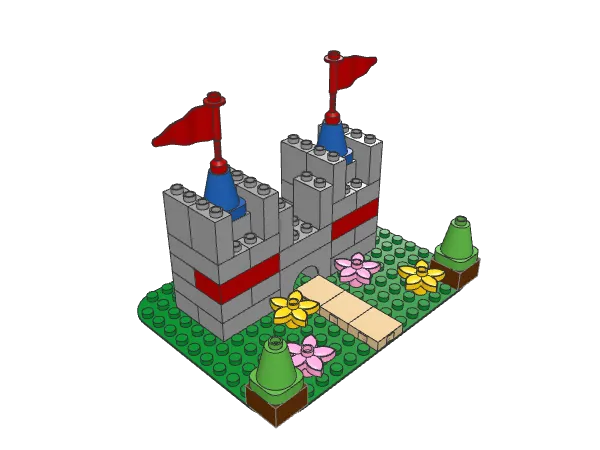
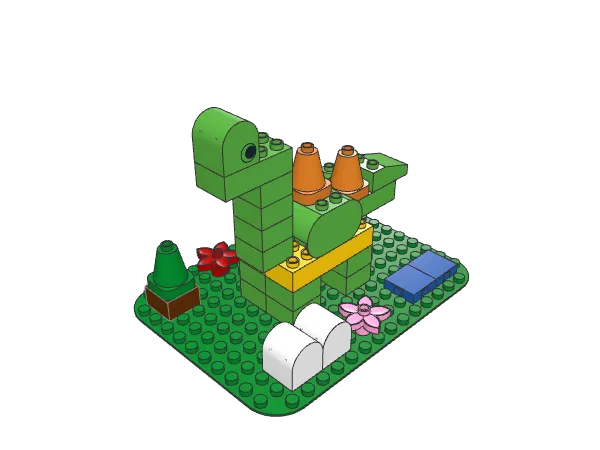
- Combine builds. A Toddler Dino can visit the Toddler Castle. Once you have built two or three models, they become a little town.
Where to start
If this is your first build together, a small model with a clear subject works best: the Toddler House has a door that swings and a roof that finishes the house, and the Toddler Farm has two animals to play with at the end. When your child asks for more, the full list of big-brick builds is in the LEGO® DUPLO® collection, grouped into houses and castles, animals and dinosaurs.